








Uncategorized
Beyond Physical Dexterity: How CBSH Robot Quadruped Robots Evolve Emotional Intelligence for Human Collaboration
Jun
Introduction
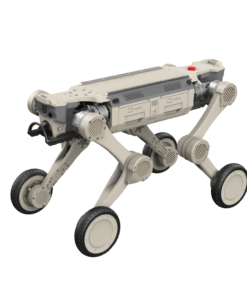
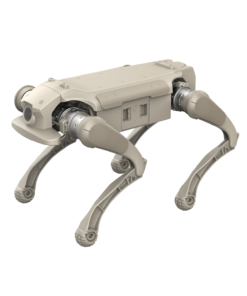
As quadruped robots continue to advance in mobility, stability, and physical operational precision, they are increasingly deployed in public service, industrial inspection, and daily collaborative scenarios. While superior athletic and executive capabilities enable robot dogs to perform repetitive, high-intensity, and high-risk tasks efficiently, true seamless human-robot collaboration relies on more than mechanical performance. It requires robots to understand, adapt to, and resonate with human emotional states in real-world interactive contexts.
Recent industry studies published in IEEE Robotics and Automation Letters have verified a critical conclusion: traditional emotion recognition systems that rely solely on facial expression analysis often produce biased judgments. Human emotions are highly contextual—a furrowed brow may signal concentration rather than anger, and silent hesitation may come from task confusion instead of dissatisfaction. Robots can only achieve natural human-robot teamwork by combining facial features, voice tones, body gestures, and interactive scene logic for comprehensive emotional perception.
Inspired by this human-centric interactive principle, CBSH Robot is actively advancing emotional intelligence upgrades for its quadruped robot dogs, focusing on breaking the limitations of single-dimensional emotion recognition and building context-aware adaptive interaction capabilities.
Moving Beyond Traditional Emotion Recognition
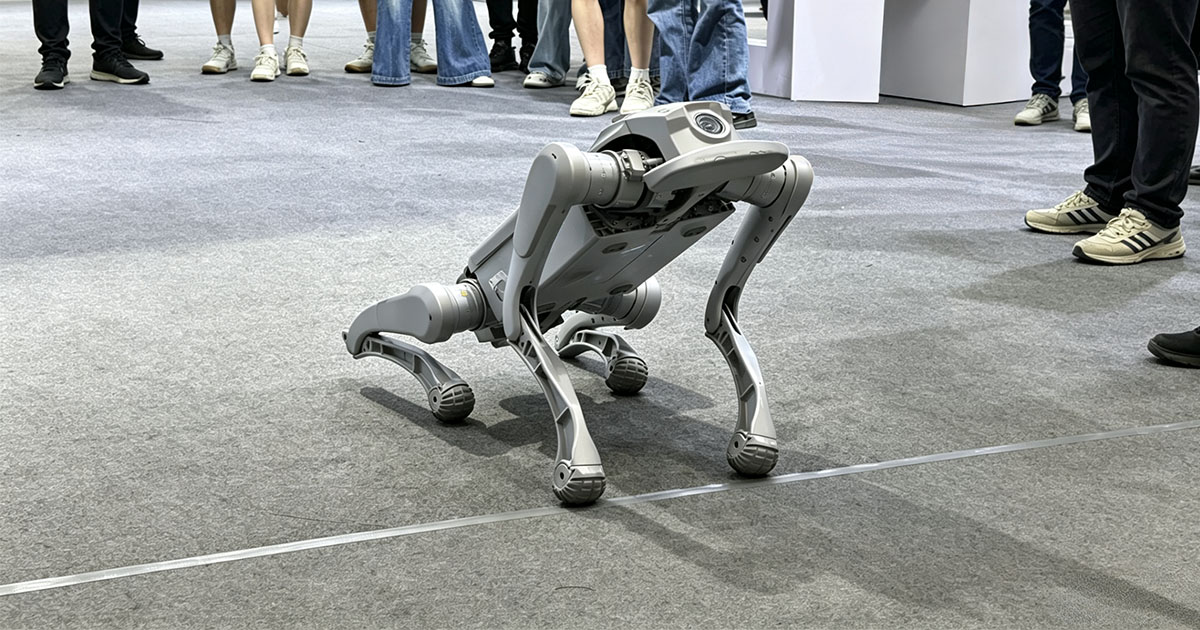
Different from conventional industrial robots that execute fixed programmed responses, CBSH Robot’s new generation quadruped robots integrate optimized vision-language model (VLM) frameworks tailored for human-robot interactive scenarios. Rather than simply capturing facial micro-expressions, the robot dog continuously analyzes full-scene interactive information: human movement rhythms, voice fluctuations, task progress status, and behavioral feedback during collaboration. This multi-modal perception system allows the robot to understand the cause behind human emotions, not only the phenomenon.
Multi-Modal Perception for Deeper Human Understanding
In internal collaborative task tests, CBSH Robot’s R&D team simulated various real working scenarios, including human hesitation during cooperative operations, mild frustration caused by task delays, and relaxed communication in daily interaction. The experimental results show that the context-aware emotional recognition model significantly outperforms traditional single facial-analysis algorithms in accuracy and human perception consistency. When humans encounter operational confusion or temporary setbacks, the robot dog can actively slow down its movement rhythm, adjust interaction frequency, and deliver gentle adaptive feedback, instead of rigidly executing preset procedures.
Emotional Adaptability and Human Trust
The team’s research also confirms a core industry consensus verified in authoritative HRI (Human-Robot Interaction) studies: emotional adaptability serves as social lubrication, while functional reliability remains the foundation of human trust.
In multiple simulation experiments where robot dogs made minor operational deviations, human testers consistently reported that personalized, emotionally adjusted responses greatly improved interactive comfort. However, users’ overall trust in the robot ultimately depended on task execution stability and environmental adaptability. Warm emotional interaction cannot compensate for insufficient functional performance, and intelligent perception cannot replace reliable engineering capabilities.
Balancing Emotional Intelligence with Engineering Excellence
Based on this balanced development philosophy, CBSH Robot’s iteration logic for quadruped robots remains clear. The team continues to polish the robot dog’s core physical capabilities—including all-terrain traversability, precise motion control, and stable long-hour operation. Meanwhile, the company embeds lightweight emotional interaction algorithms into commercial-grade robot systems, making industrial-level robots more humane, responsive, and friendly in public services, community patrols, smart scenic spots, and auxiliary inspection scenarios.
Building Long-Term Human-Robot Collaboration
At present, most AI robots can act as qualified task executors and third-party observers of human emotions. CBSH Robot’s ongoing exploration aims to take a further step: enabling commercial quadruped robots to understand human internal feelings matching real interactive scenarios, deliver appropriate behavioral feedback, and build trustworthy, comfortable, and efficient long-term human-robot collaboration relationships.
The Future of Intelligent Collaborative Robots
As the robotics industry enters the post-mechanical era, physical precision will no longer be the only competitive threshold. Context-aware emotional intelligence will become the key dimension that distinguishes ordinary automated machines from truly intelligent collaborative robots. With continuous technical iteration, CBSH Robot will keep empowering commercial quadruped robots with human-centric interactive capabilities.