

Uncategorized
Coffee Robot: How AI Coffee and Robot Baristas Are Transforming Modern Cafés
May
The global coffee industry is changing fast. Rising labor costs, staff shortages, longer customer wait times, and the demand for consistent quality are pushing café owners to rethink traditional operations. At the same time, customers are becoming more interested in automation coffee robot, smart technology, and unique experiences.
From fully automated robot coffee shops in airports to AI-powered coffee kiosks in shopping malls, robotic coffee technology is no longer a futuristic concept. It is already reshaping how cafés operate around the world.
Today’s advanced robot barista systems can prepare espresso, cappuccino, latte art, and even personalized drinks with impressive speed and precision. Many café chains and B2B buyers are now exploring how AI coffee systems can improve efficiency, reduce operational costs, and increase customer satisfaction.
In this guide, you will learn:
- What a coffee robot is
- How AI coffee systems work
- Benefits and challenges of robot coffee shops
- Real-world business applications
- Market trends and investment opportunities
- Expert tips for buyers and importers
Whether you are a café owner, distributor, importer, or automation business looking for profitable opportunities from China, this article will help you understand the future of robotic coffee solutions.
- What Is a Coffee Robot?
- How AI Coffee Robot Technology Works
- Why Cafés Are Adopting Robot Baristas
- Types of Coffee Robot Systems
- Real-World Examples of Robot Coffee Shops
- Benefits of Coffee Robots for Businesses
- Challenges and Limitations
- Coffee Robot Market Trends
- How to Import Coffee Robots from China
- FAQ About Coffee Robots
- Conclusion
What Is a Coffee Robot?
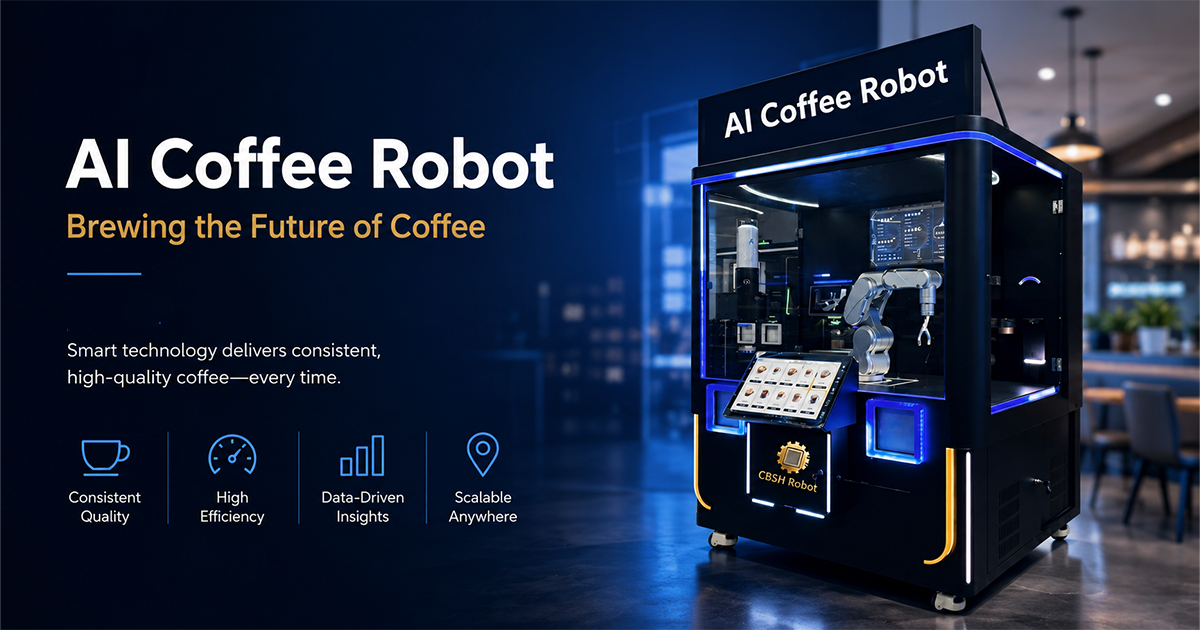
A coffee robot is an automated system designed to prepare and serve coffee drinks with minimal human involvement. These systems combine robotics, sensors, AI software, and automated brewing technology.
Depending on the setup, a coffee bot can:
- Grind coffee beans
- Steam milk
- Brew espresso
- Prepare latte art
- Accept digital payments
- Track inventory
- Recommend drinks using AI
Some systems work as compact vending-style kiosks, while others operate as fully automated robot coffee shops.
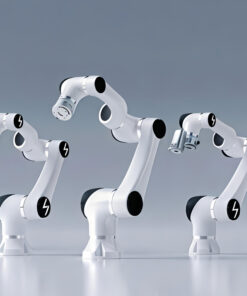
The most advanced barista bot systems use robotic arms that mimic human barista movements with remarkable precision.
How AI Coffee Robot Technology Works
Modern AI coffee systems combine several technologies into one platform.
Core Technologies Behind Robot Baristas
1. Artificial Intelligence
AI software analyzes customer preferences, order history, and drink trends. Some systems can recommend beverages based on weather, time of day, or customer habits.
2. Robotics
Robotic arms and automated dispensers handle physical coffee preparation tasks such as brewing, pouring, and serving.
3. IoT and Sensors
Sensors monitor:
- Water temperature
- Bean freshness
- Cup positioning
- Milk levels
- Machine maintenance needs
4. Cloud Management
Operators can manage multiple robot coffee shops remotely through cloud dashboards.
This helps businesses:
- Track sales
- Monitor inventory
- Analyze customer data
- Reduce downtime
Why Cafés Are Adopting Robot Baristas
Rising challenges are putting the food and beverage industry under significant strain.
Labor shortages, rising wages, and customer demand for faster service are major concerns for café operators worldwide.
A robot barista helps solve several of these problems.
Faster Service
A coffee bot can often prepare drinks faster than human staff during busy periods.
Some systems can produce:
- 150–300 cups per hour
This makes them ideal for:
- Airports
- Train stations
- Shopping malls
- Office buildings
- Events
Consistent Coffee Quality
Manually prepared beverages may differ depending on the shift in which they are made.
A robot coffee system delivers:
- Precise measurements
- Stable brewing temperature
- Consistent taste
Consistent output is particularly important for franchise operations.
Lower Long-Term Labor Costs
Although initial investment can be high, automation may reduce long-term staffing expenses.
Businesses can operate:
- 24/7
- With fewer employees
- With reduced training costs
Customer Attraction
Many consumers enjoy the novelty of watching a robot prepare coffee.
This creates:
- Social media exposure
- Viral marketing opportunities
- Higher customer engagement
Types of Coffee Robot Systems
Not all coffee robots are the same.
Different systems target different business models.
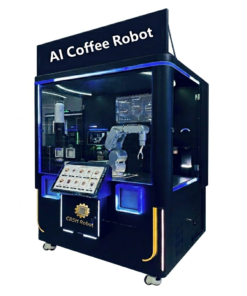
Fully Automated Robot Coffee Shop
These are standalone coffee kiosks that operate with little or no staff.
Common locations include:
- Airports
- Hospitals
- Universities
- Retail centers
Features may include:
- Touchscreen ordering
- Mobile payment
- Robotic brewing
- Self-cleaning systems
Robot Barista Arm
This setup uses robotic arms behind a traditional café counter.
The robot performs:
- Espresso extraction
- Milk steaming
- Cup serving
Meanwhile, human staff may still handle customer interaction.
Coffee Vending Robot
These compact coffee bots are designed for convenience locations.
They are often:
- Smaller
- Lower cost
- Easier to install
Suitable for:
- Offices
- Factories
- Hotels
AI Coffee Recommendation System
Some businesses use AI software without physical robots.
These systems analyze customer behavior and improve:
- Upselling
- Drink recommendations
- Inventory management
Real-World Examples of Robot Coffee Shops
Several companies around the world are already using robotic coffee technology successfully.
Café X
Known for its robotic arm system, Café X became popular for delivering premium coffee quickly in busy urban areas.
The robot prepares drinks inside a glass-enclosed station, attracting customer attention.
Briggo (Costa Coffee)
Briggo developed autonomous coffee kiosks powered by AI and robotics.
The system focuses on:
- Fast service
- Mobile ordering
- Personalized drinks
Rozum Café
This robot barista uses advanced robotic arms to replicate professional barista movements.
The company targets:
- Airports
- Hotels
- Retail spaces
Benefits of Coffee Robots for Businesses
1. Scalability
A robot-powered coffee shop can scale smoothly across different locations by keeping its operations uniform and standardized.
2. Reduced Human Error
Automation reduces mistakes in:
- Drink preparation
- Payments
- Inventory management
3. Data Collection
AI-driven coffee systems collect useful customer insights that can be used to enhance marketing strategies and improve operational efficiency.
4. Hygiene and Safety
Automated technology reduces the need for direct human involvement when preparing beverages.
This became especially important after the pandemic.
5. Energy Efficiency
Many modern systems optimize:
- Water usage
- Power consumption
- Ingredient control
Challenges and Limitations
Despite the advantages, coffee robots also have challenges.
High Initial Investment
Advanced robotic systems can cost:
- Tens of thousands of dollars
- Or more for premium installations
This may not suit small cafés with limited budgets.
Maintenance Requirements
Coffee robots require:
- Technical servicing
- Software updates
- Regular cleaning
Downtime can impact business operations.
Limited Human Interaction
Some customers still prefer:
- Human conversation
- Personalized café experiences
This is why hybrid models are becoming popular.
Customization Challenges
Complex custom drink requests may still be easier for experienced human baristas.
Coffee Robot Market Trends
The global food automation industry is growing rapidly.
Several factors are driving demand for coffee robots.
Growing Labor Costs
Businesses worldwide are seeking automation to improve profitability.
Smart Retail Expansion
Automated retail concepts are expanding in:
- Asia
- North America
- Europe
- Middle East
AI Integration
Future AI coffee systems may include:
- Facial recognition
- Voice ordering
- Predictive inventory management
Rising Demand from China Manufacturing
China has become a major supplier of:
- Coffee robot hardware
- Robotic arms
- Smart vending systems
Many importers now source robot coffee shop equipment directly from Chinese manufacturers.
How to Import Coffee Robots from China
For importers and B2B buyers, China offers competitive pricing and scalable manufacturing.
However, careful supplier evaluation is essential.
Key Things to Check
Factory Experience
Choose manufacturers with:
- Proven export history
- Automation expertise
- International certifications
Certifications
Important certifications may include:
- CE
- FCC
- RoHS
- ISO
Software Support
Ask whether the supplier provides:
- Remote troubleshooting
- Software updates
- Cloud management systems
Spare Parts Availability
Always confirm:
- Replacement parts
- Warranty terms
- Technical support
Custom Branding
Many suppliers offer OEM and private label services.
This helps businesses launch branded robot coffee solutions.
FAQ About Coffee Robots
What is a coffee robot?
A coffee robot is an automated system that prepares and serves coffee using robotics, AI, and smart brewing technology.
How does a robot barista work?
A robot barista uses robotic arms, sensors, and automated brewing systems to prepare coffee drinks with minimal human involvement.
Are robot coffee shops profitable?
Yes, robot coffee shops can be profitable in high-traffic locations due to lower labor costs and faster service.
Can AI coffee systems replace human baristas?
AI coffee systems can automate many tasks, but human interaction and creativity still remain valuable in many cafés.
How much does a coffee robot cost?
Prices vary widely depending on features and automation level. Basic systems may start around several thousand dollars, while advanced robotic cafés can cost much more.
Are coffee robots popular in China?
Yes. China is one of the fastest-growing markets for robot coffee shop technology and automated retail systems.
Is importing coffee robots from China a good business?
It can be profitable for distributors and automation companies if they choose reliable suppliers and target growing markets.
Conclusion
The rise of the coffee robot is transforming the global café industry.
What once seemed futuristic is now becoming a practical business solution for cafés, airports, hotels, offices, and retail chains. From AI coffee systems to advanced robot baristas, automation is helping businesses improve speed, consistency, and operational efficiency.
At the same time, customer curiosity around robot coffee shops continues to grow, creating strong opportunities for B2B buyers, importers, and automation companies.
For businesses sourcing from China, the market offers significant potential. But success depends on choosing reliable suppliers, understanding local customer preferences, and building scalable operations.
The future of coffee is no longer only about taste. It is also about technology, experience, and smart automation.
Businesses that adapt early may gain a major competitive advantage in the evolving café industry.
