

















Uncategorized
The Future of Welding: Why Robots Are Replacing Manual Welding

May
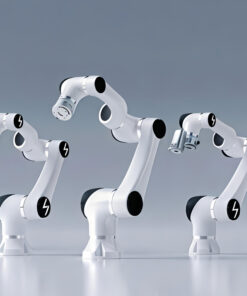
Welding isn’t exactly a comfortable job for humans—think high heat, smoke, and sometimes harmful chemicals, like hexavalent chromium released when welding stainless steel. That’s why more and more manufacturers are turning to robots for welding tasks.
Before introducing robots into your workflow, there are a few key questions I always consider to make sure the investment pays off:
1. What’s the size of your parts? Smaller parts fit easily into a robotic welding cell, but robots can handle larger components too.
2. What’s your production volume? Robots are best for high-volume welding—thousands of pieces per day, hundreds of thousands per year. If your output is too low, the cost of the equipment may be harder to recover.
3. How tight are your tolerances? Precise tolerances are crucial for repeatable, accurate welding. Parts that vary too much in size can cause errors.
4. Is labor a challenge? If you’re facing worker shortages, robots can help. But even with automation, skilled personnel are still needed to program and supervise the robots.
One of the biggest advantages of robotic welding is that it frees up human welders from repetitive tasks. With proper training, my team (and yours) can quickly learn to operate and program robots, ensuring safe, efficient, and consistent production.
By adopting robotic welding, you gain accuracy, efficiency, and labor savings—all while making your factory safer and more modern. If you’ve been considering taking the leap into automation, now is a great time to explore the possibilities.
